

Smoked Espresso Martini Recipe: Premium Cocktails at Home
A home-made espresso martini becomes truly bar-quality when three things come together: freshly pulled espresso, precise ratios, and an ice-cold, creamy texture. The smoked version adds an extra layer: it doesn't overpower the coffee, it turns the cocktail into a deeper, evening ritual.
Contents
- Quick answer: the best espresso martini recipe for home
- Measured ratios and quantities for a creamy texture
- Smoking a cocktail in practice
- Wood chips, glass and accessories by flavour
- Which cocktail smoker is right for whom?
- Common mistakes before making an espresso martini
- Frequently asked questions
Key takeaways
- A good starting point for one serving: 40 ml vodka, 30 ml fresh espresso, 25 ml coffee liqueur, 5–10 ml sugar syrup.
- Coffee alone isn't enough for a creamy top: you need plenty of ice, a hard shake and a quick strain.
- For a smoked espresso martini, fruit wood chips are softer, while oak and beech give a more pronounced character.
- Keep the smoking short: for cocktails, 10–20 seconds is usually enough.
- Espresso that's too hot, too little ice and too much smoke are the three most common mistakes.
Quick answer: the best espresso martini recipe for home
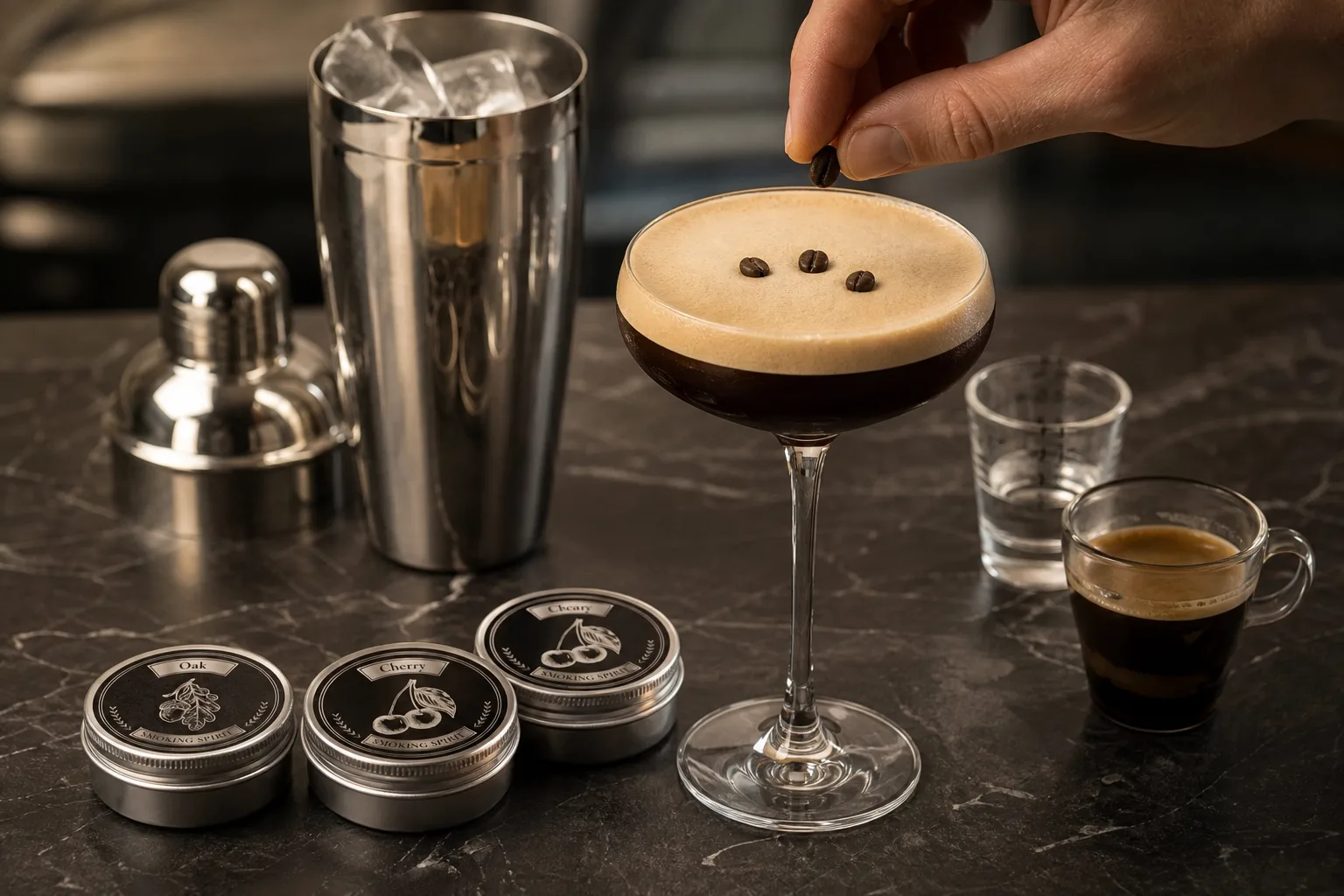
The idea behind a classic espresso martini recipe is simple: strong coffee, a clean spirit base, coffee sweetness and intense chilling. For one cocktail, measure 40 ml vodka, 30 ml fresh espresso, 25 ml coffee liqueur and 5–10 ml sugar syrup, then shake with plenty of ice. The goal isn't a watery drink, but one that chills fast, dilutes gently and develops a cocktail foam on top.
The smoky twist works well when it isn't trying to "rescue" the recipe, but to deepen the aroma of the finished drink. If the espresso is bitter, smoke can make it even harsher; but if you smoke a fresh, aromatic, well-chilled cocktail, the coffee, the wood and the spirit base build on each other beautifully.
When making it at home, the choice of espresso martini glass matters too. A classic martini or coupe glass is elegant because it shows off the foam across a wide surface, but a short, thick-walled glass can look more dramatic for smoking. When smoking, it helps if the mouth of the glass can be covered well, so the smoke doesn't escape right away.
Measured ratios and quantities: what makes it creamy, cold and balanced
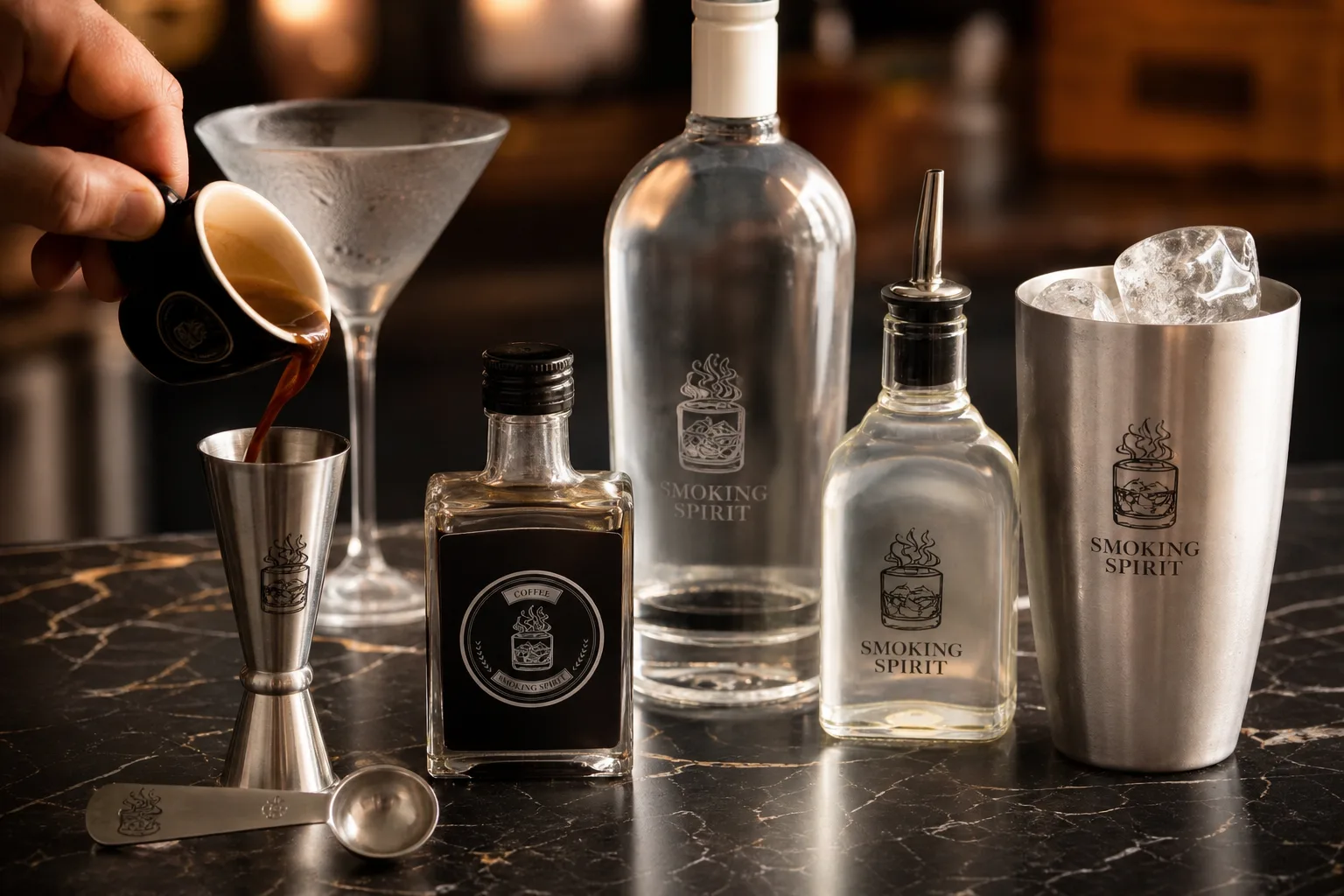
A good espresso martini isn't made "by feel", at least not the first few times. Ratios measured in millilitres matter because vodka, coffee liqueur and espresso behave very differently: one brings alcohol, another sweetness and coffee body, the third a bitter aroma and foam-forming compounds. If one ingredient sticks out, the cocktail ends up too sweet, too thin or too boozy.
A good base for one serving: 40 ml vodka, 30 ml espresso, 25 ml coffee liqueur, 5 ml sugar syrup. If you want a more dessert-like drink, the sugar syrup can go up to 10 ml, but more than that easily masks the coffee. If your coffee liqueur is already very sweet, start with no sugar syrup and only adjust on your second try.
Shaker size matters too. A 750 ml shaker comfortably holds one cocktail with plenty of ice, and you can try two servings if you don't overfill it. The three-piece design, built-in strainer and airtight lid of the 3-Piece Cocktail Shaker 750ml are especially practical for this style: you need to shake hard, then strain quickly and cleanly into the glass.
With espresso temperature, the aim is to avoid melting the ice too fast. Freshly brewed espresso is more aromatic, but if it goes straight into the shaker it causes more meltwater. A good compromise is to let the espresso rest for 1–3 minutes, or brew it into a pre-chilled small cup. Don't skimp on ice: 8–10 larger ice cubes per serving usually provide enough cooling surface.
Shaking time should be firm but short: 12–15 seconds of vigorous shaking is usually enough. A nice crema comes from fresh coffee, aeration and fast chilling. If the top is flat, it's usually not the recipe that's wrong, but too little ice, a weak shake, or the cocktail sitting too long before straining.
- Chill the glass for at least 5 minutes with ice or in the freezer.
- Measure the vodka, coffee liqueur, espresso and sugar syrup into the shaker.
- Fill the shaker with large ice cubes, then shake hard for 12–15 seconds.
- Strain into the glass immediately so the foam stays on the surface.
- If you're smoking it, only work with smoke after pouring, with a short contact time.
Smoking in practice: how to use a whisky smoker kit for cocktails
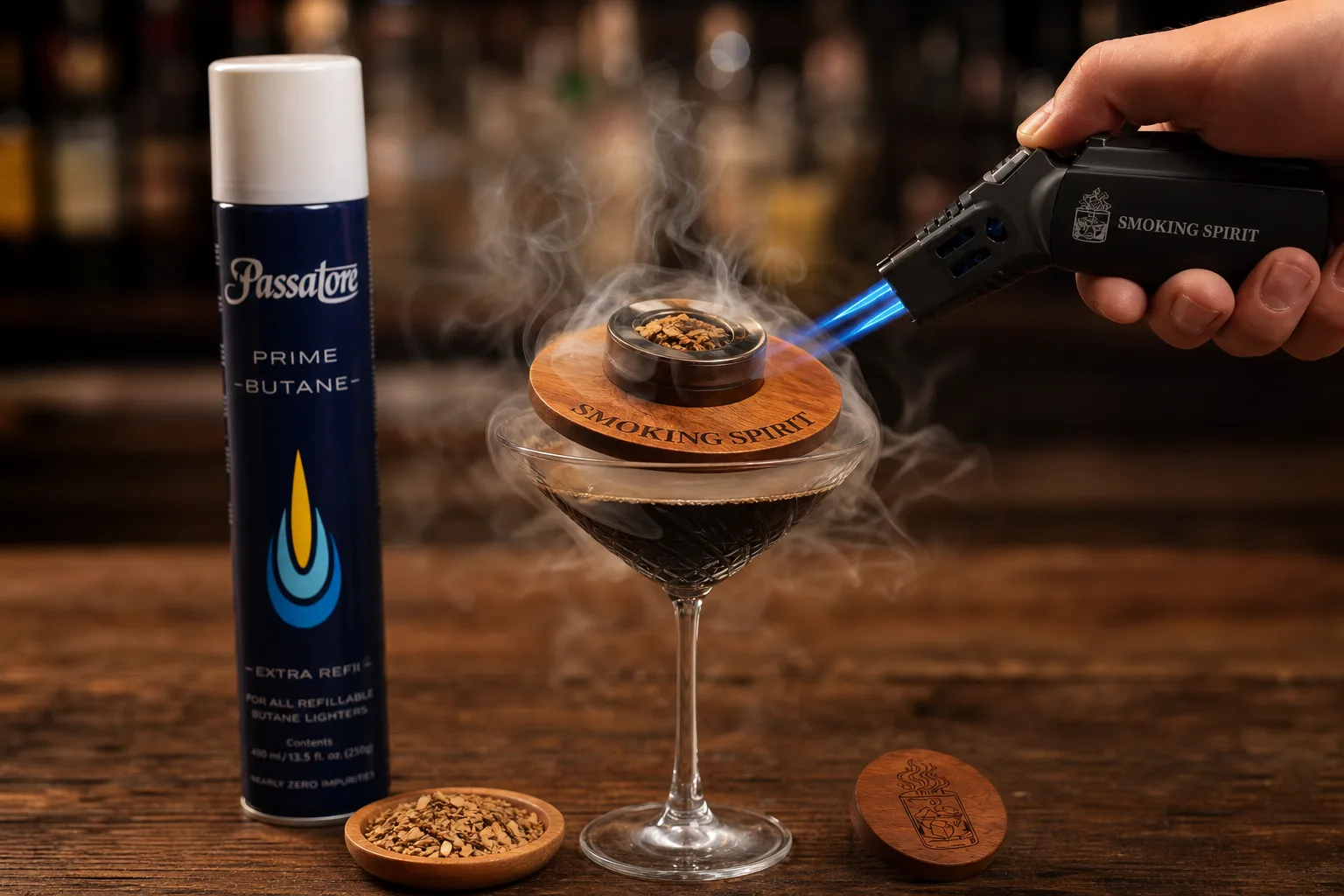
When smoking, the most important decision is whether you want the liquid to touch the smoke, or rather to perfume the inside of the glass and the surface of the cocktail. For an espresso martini, the cleaner approach is usually to make the drink first, strain it into the glass, then smoke the glass. That way the foam stays intact, the texture isn't damaged, and the smoke doesn't get roughly mixed through the whole drink in the shaker.
Smoking in the shaker looks spectacular but is riskier: the smoke can easily become too dominant, and the cocktail foam can lose its finesse. Smoking in the glass gives you better control over intensity. In a coffee cocktail, even 10–20 seconds of smoke contact is noticeable; beyond 30 seconds the smoke can easily take over, especially with a stronger wood.
You don't need to think in big quantities of wood chips. For one glass, a small pinch is usually enough, roughly an amount that thinly covers the burning surface of the smoker. If the smoke is dense, there's no need to keep burning: cover the glass, wait briefly, then release it. The goal is a delicate layer of aroma, not an intensity reminiscent of smoked meat.
If you're looking for a complete home solution for both cocktails and whisky, the Whisky Smoker Kit suits this use because it includes a smoker, whisky stones and 8 different wood chips. For an espresso martini, the smoker provides the impressive aroma lock-in, while the different woods let you take the same base recipe in several directions.
There is no compromise on safety. Always work on a stable, heat-resistant surface, and keep open flames away from paper, textiles and alcohol-soaked tools. The quality of the gas for your smoking gun is part of the experience: according to its description, Passatore Prime Butane - premium lighter refill gas - 400ML is 5-times filtered and burns clean and odourless, which matters especially with premium drinks, because you don't want a foreign smell sitting on top of the coffee aroma.
| Smoking method | Flavour intensity | Advantage | Watch out for |
|---|---|---|---|
| Pre-smoking the glass | mild to medium | clean aroma, low risk | pour the cocktail in quickly |
| Smoking the finished cocktail in the glass | medium | spectacular, easy to control | don't leave it covered too long |
| Smoking in the shaker | strong | deeper smoky character | can easily overpower the foam |
| Smoking the garnish | mild | delicate aroma on the surface | less lasting effect |
Wood chips, glass and accessories: which setup gives which flavour?
Your choice of wood chips noticeably shifts the character of an espresso martini. Fruit woods generally give a softer, rounder direction, so they're good when you want to make the bitterness of the coffee more elegant. Apple can add a sweet fruitiness, pear a lighter woody-spicy nuance, cherry a redder-berry finish, and peach a more nectar-like feel in the smoke.
More characterful woods work better when your drink is full-bodied to begin with. Oak can take the aroma in a classic barrel, vanilla direction, beech can give a cleaner, more neutral smoke, pecan can bring a deeper, nuttier feel, and Japanese cherry can add a more floral cloud above the glass. For a coffee cocktail, start with a soft wood first, then gradually move toward more pronounced ones.
If you'd like to try several woods with the same espresso martini base, the Smoking Spirit Wood Chips for Whisky Smokers are useful because they include 8 different wood chips, among them apple, pear, cherry, Japanese cherry, peach, oak and beech. That way you don't need to look for a new recipe: you can compare on one stable base drink what the wood changes.
With the glass, weigh two things: how much smoke it can hold, and how well the cocktail foam shows. A classic martini glass or coupe shows off the surface beautifully but is harder to cover. A shorter glass of around 320–330 ml works better for smoking, because its mouth is easier to close and the smoke settles in it more dramatically. If photogenic serving is the goal, a thin wisp of smoke swirling above the foamy surface is the strongest visual element.
Which smoking solution suits whom for an espresso martini?
As a beginner, you'll do best by first stabilising the recipe and only then increasing the smoke intensity. For the first 2–3 times, stick to the 40/30/25/5 ml ratio, use plenty of ice, and choose a short contact time of around 10 seconds when smoking. The goal then isn't the strongest aroma, but to feel when the meeting of coffee and smoke becomes harmonious.
As a gift, smoked cocktails are a strong choice for people who love ritual: chilling the glass, pulling the espresso, shaking the shaker, releasing the smoke. The experience here isn't just about the drink, but about those few minutes when someone creates their own bar atmosphere at home. In the story of Smoking Spirit, the outlook that grew out of grill and whisky culture also strengthens this personal, evening experience.
For experimental cocktail fans, the difference between wood chips will be the main game. With the same base it's worth trying apple, cherry, oak and beech one after another, but change only one variable at a time. If you swap the sugar syrup, the coffee liqueur and the wood all at once, you won't know what made the result better or worse.
For frequent home use, practicality matters: have enough ice at hand, a stable smoking surface, a well-sealing glass and a refillable flame source. If you make smoked cocktails several times a week, you'll quickly find that the slowest part of the process isn't the mixing but the preparation. It's worth setting up a fixed cocktail tray with your measuring tools, wood chips and a clean glass, so making a drink doesn't become a big set-up project.
For entertaining or evenings with friends, don't start with many versions at once. Make one basic espresso martini, then offer two smoke directions: a soft fruity one and a more characterful woody one. That way guests can really feel the difference, but the evening isn't lost in too many decisions.
Common mistakes before making an espresso martini
The first mistake is espresso that's too hot. If it goes into the shaker piping hot, it melts the ice quickly, and the drink can end up thinner and less creamy. Avoid this by letting the espresso rest briefly, but not letting it go completely stale.
The second mistake is too little ice. Two or three cubes don't chill, they just melt fast. Use 8–10 larger ice cubes, because the bigger cooling surface gives a colder cocktail in a shorter shaking time.
The third mistake is shaking too gently. An espresso martini isn't a stirred drink: you need to bring air into it to build the foamy surface. Shake hard for 12–15 seconds, then strain immediately.
The fourth mistake is too much sugar syrup. Coffee liqueur is already sweet, so the syrup is only for fine-tuning. Start with 5 ml, and only go up to 10 ml if your espresso is very bitter.
The fifth mistake is smoking for too long. Smoke is tempting because it looks impressive, but in an espresso martini it easily masks the finer notes of the coffee. Start with 10–20 seconds, and only increase it if you deliberately want a stronger, smokier drink.
The sixth mistake is choosing the wrong glass. In a glass that's too big, the foam looks thinner and the smoke disperses faster. A classic cocktail glass of around 150–250 ml is good for elegant serving, while for smoking a glass of around 320–330 ml with a mouth that's easier to cover can be more practical.
Frequently asked questions
Can you make an espresso martini without coffee liqueur?
You can, but you move away from the classic espresso martini character. Coffee liqueur doesn't just add sweetness, it also adds body and a deeper coffee flavour, so without it the cocktail can be thinner. If you leave it out, you can compensate with more espresso and a little sugar syrup, but the result will be different.
Which wood chips go best with a coffee cocktail?
To start, apple, pear or cherry are good directions, because they give a softer, fruitier aroma. Once you know you want a stronger smoke, you can try oak or beech. The best method is to make the same recipe and only swap the wood chips.
How long should you shake an espresso martini?
Generally 12–15 seconds of hard shaking is enough for one serving. With a shorter time the foam can be weaker, and with longer shaking the chance of dilution grows. The goal is an ice-cold, creamy texture, not a watery drink.
What glass should you serve it in?
If the classic look matters, the foamy surface looks beautiful in a martini or coupe glass. If you also want to smoke it, a shorter, wide-mouthed glass that's easier to cover can be more practical. Always pre-chill the glass, because warm glass quickly spoils the drink's temperature.
Is it worth buying a cocktail smoker kit if you'd mainly use it for cocktails?
Yes, if you don't see it as a one-off visual trick but use it for flavour experimentation. Smoking can be tried with an espresso martini, an old fashioned, gin-based drinks or even non-alcoholic coffee drinks. It gives the most when you test the same base recipe with several kinds of wood chips.
What gives an espresso martini a nice foam on top?
The foam needs fresh espresso, enough ice and a hard shake. The meeting of coffee and air in the shaker creates the creamy surface, so don't just gently slosh it around. Serve right after straining, because the foam naturally thins over time.
Conclusion
A smoked espresso martini becomes truly premium at home when you first master the exact base recipe and only then play with the wood, glass and smoking time. Start with the proven ratios, shake it ice cold, then give it a short, controlled smoke — that way the cocktail isn't an over-the-top stunt, but a memorable evening ritual.
Our recommended products


